At Conservation SA, we believe a healthy environment and a just society cannot be separated.
For decades, the environmental movement has fought hard for policy wins to protect nature and stabilise our climate. Yet systemic progress has been slow. We recognise this is not only a failure of policy. It is also a failure to address the deeper drivers of both ecological and social harm: colonisation, racism, extractive economic systems, and the idea that people are separate from nature.
We have committed to shifting our strategy, theory of change, campaigns and day-to-day operations toward a justice-focused approach. A justice lens recognises that climate, social and ecological crises are linked and must be addressed together. Solutions that ignore equity fail, both morally and strategically, and lasting change depends on stronger, more diverse community power.
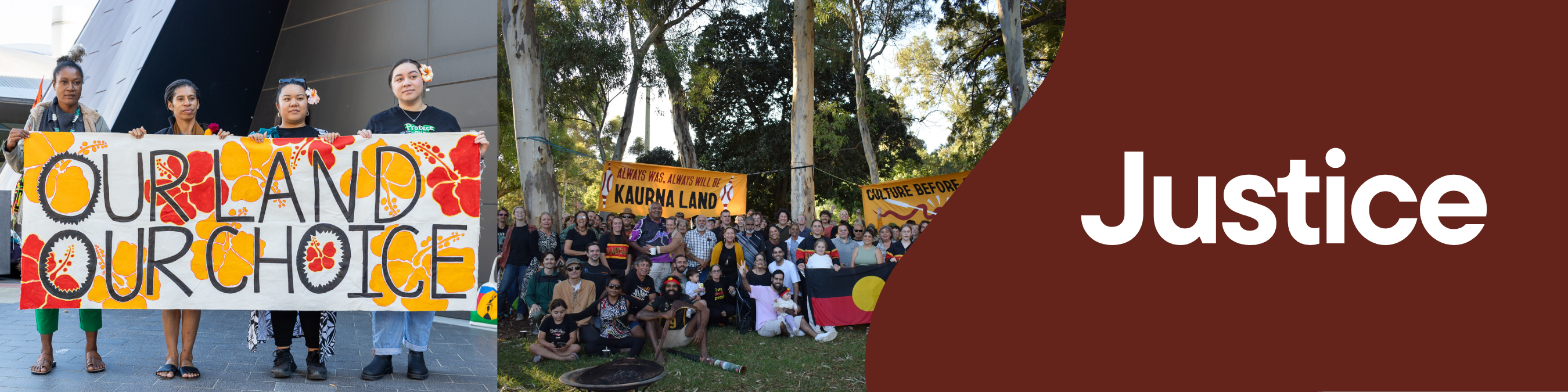
First Nations justice as our foundation
Justice spans many intersecting areas, including social and economic equity, disability justice, gender justice, intergenerational justice and the rights of communities most affected by environmental harm. We are prioritising First Nations justice as our first and essential focus.
First Nations peoples are the original custodians of Country. They have been disproportionately harmed by colonisation and environmental destruction, and they continue to lead resistance to the extractive systems driving the climate and biodiversity crises. Their leadership and teachings about reciprocity, kinship and the interconnectedness of all living systems are central to any credible environmental agenda.
This focus is foundational, not exclusive. It is building the principles, skills and structures we need to embed justice more broadly across our campaigns, partnerships and operations over time.
Putting it into practice
Throughout 2025/2026 we began turning that commitment into action:
- Partnerships and respect: We've built a partnership with the Pacific Islands Council of South Australia (PICSA), updated our Acknowledgement of Country to state our commitment to sovereignty, justice and allyship, and have marked key dates including NAIDOC Week, National Reconciliation Week and Survival Day.
- Policy and governance: We undertook learning to inform an anti-racism and racism-prevention policy, cultural competency expectations, and a justice lens for all campaigns and projects.
- Campaigns: We are embedding justice into campaigns such as Dump Santos, prioritising First Nations and frontline community voices, and adding a justice evaluation step to how we develop campaigns.
- Learning: Our team pursued anti-racism training and shared our approach with the wider movement.
- Resourcing First Nations leadership: Our First Nations Partnership Grants support First Nations-led projects and the participation of First Nations leaders. We are also exploring funding for Aboriginal and Torres Strait Islander roles within Conservation SA, with mentoring, networks and cultural load protections built into role design.
- Paying for expertise: We are working toward formal agreements and co-design partnerships with First Nations organisations, ensuring their expertise is properly paid.
Why it matters
A justice-focused approach strengthens our campaigns by grounding them in lived experience, builds broader and more diverse coalitions, and deepens our connections with partners, communities and funders. It also keeps Conservation SA in step with best practice across the national and international environment movement.
This is long-term work, and we are deeply committed to centring justice in all our work.